
 עברית
The challenge:
A door importer, supplier and installer was not receiving enough customers despite active advertising. Website enquiries and purchases were low relative to spend. Because the campaigns sent visitors to the website to buy or enquire, the strategy needed to improve website conversions.
The approach:
The campaign review identified overly broad audiences, messaging that did not match the buying stage and unsuitable placements. We made the following changes:
Refined audiences We focused targeting on audiences with stronger purchase intent, including people researching similar products or competitors.
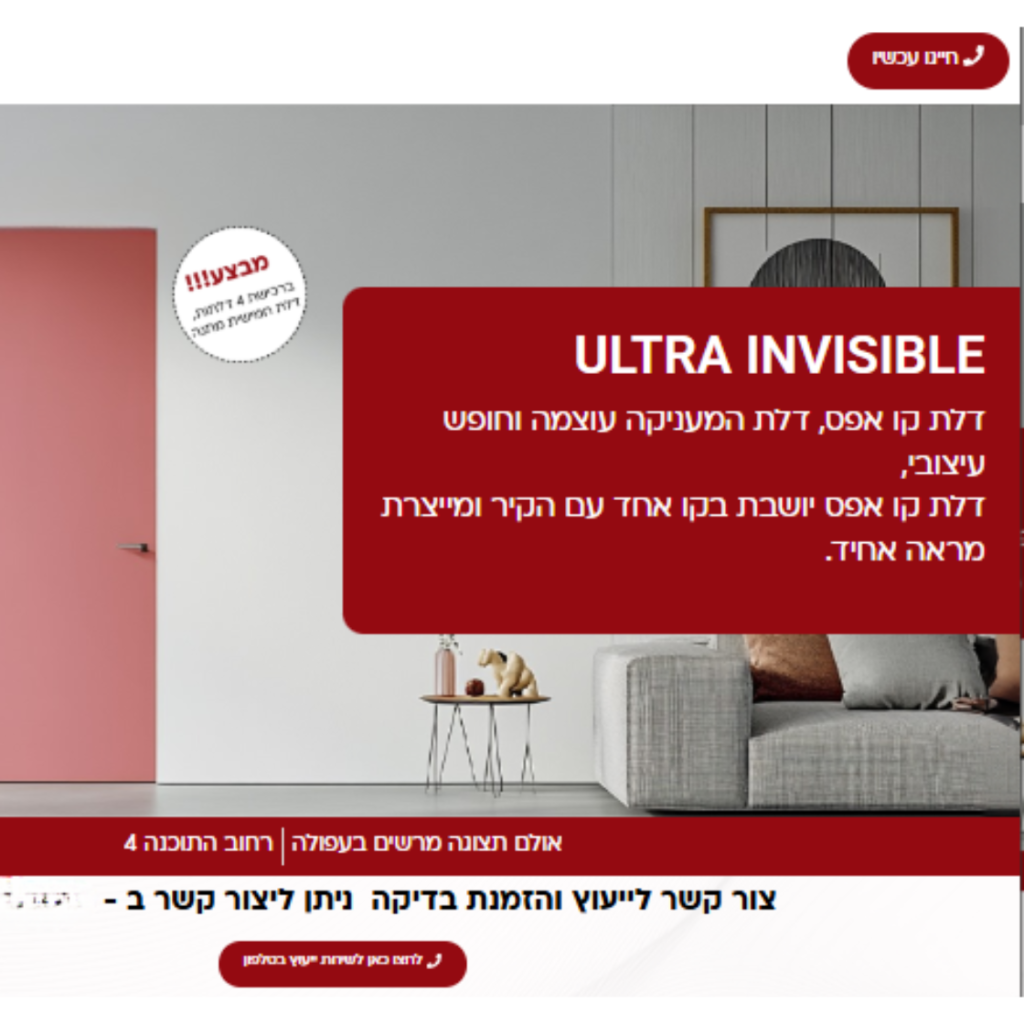
Clearer advertising messages Creative and copy highlighted door quality, professional installation and competitive prices, with clear calls to buy online or enquire about advice.
More relevant placements We restricted ads to relevant placements to improve click-through rates and traffic quality.
Mobile-only advertising Most purchases and enquiries came from mobile devices. The campaign was therefore focused on mobile, with increased clicks and website conversions recorded afterwards.
The results:
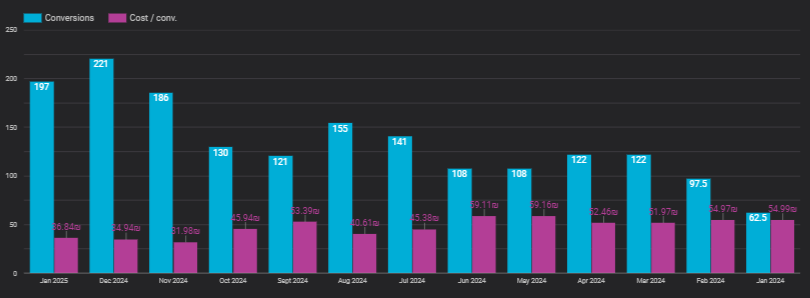
Growth in website conversions Recorded conversions, including purchases and enquiries, rose from 62.5 in January 2024 to 221 in December 2024, an increase of more than 3.5 times in recorded conversions over a year.
Lower cost per conversion Cost per conversion started at ILS 54.99 and fell during the optimisation period, reaching ILS 31.98 in some months.
Sustained improvement Following the changes, website conversions showed an upward trend, with some months recording more than twice the previous volume.
The role of mobile advertising The mobile-focused approach was associated with better traffic quality, more purchases and improved return on investment in this project.
The changes made the campaign more effective and cost-efficient, illustrating the value of aligning audiences, messaging and placements with the business and its customers.